In the unforgiving frost of Whiteout Survival, a lone city is like a single ember in a blizzard—easily snuffed out. The true path to thriving, and indeed to experiencing the game's richest content, lies in banding together. As of 2026, alliances remain the absolute cornerstone of the experience, transforming individual struggle into collective triumph. They are the engine driving friendships, fierce rivalries, and participation in a vast array of exclusive events like Crazy Joe and the Bear Hunt. Understanding the intricate mechanics of alliances is not just a recommendation; it's a prerequisite for any player aiming to leave a lasting mark on their State. This guide will delve into the very fabric of alliance life, from its foundational structures to its most advanced strategic maneuvers.
The Guild of the Frozen North: Joining and Founding
Alliances in Whiteout Survival function as powerful guilds, conglomerates of cities that offer mutual protection, territorial bonuses, and access to exclusive content. Think of a top-tier alliance not as a simple club, but as a well-oiled geopolitical entity, a glacier that carves the landscape of the State through sheer collective mass and strategic patience. The benefits are immense: safety from raids, valuable stat buffs within alliance territory, and a far greater haul from competitive events. The goal for any ambitious survivor should be to join one of the leading alliances in their State, as these groups typically dominate events and deter aggression.
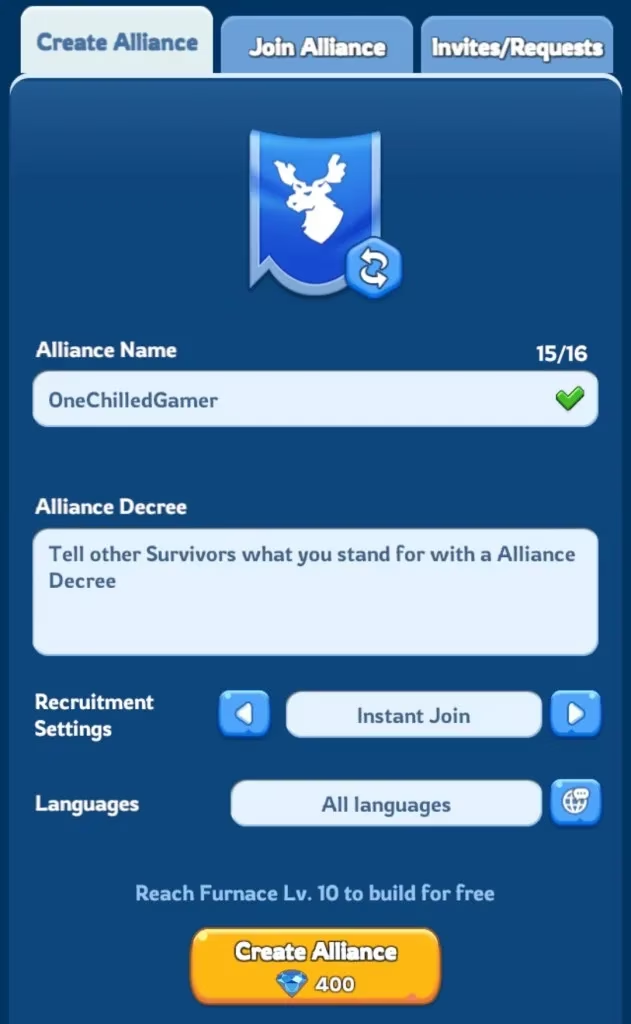
You can apply to an alliance once your Furnace reaches level 7. To find one, navigate to your profile, select the Leaderboard, and check the Alliance Power ranking. This list, sorted by collective might, is your best starting point. Scrutinize each alliance's requirements, which often include a minimum Furnace level or power score. For those with a pioneering spirit, founding your own alliance is an option for 400 Gems—a fee that is waived once your Furnace hits level 10. However, leadership is a commitment akin to navigating a ship through pack ice; it requires constant vigilance and a skilled crew.
Hierarchy and Structure: The Chain of Command
Every alliance operates with a clear hierarchy. At the summit is the R5, the leader with ultimate authority over construction, diplomacy, and membership. The R5 can appoint an unlimited number of R4 officers to share the managerial load. R4s possess significant privileges, just shy of the leader's, and are crucial for day-to-day operations.
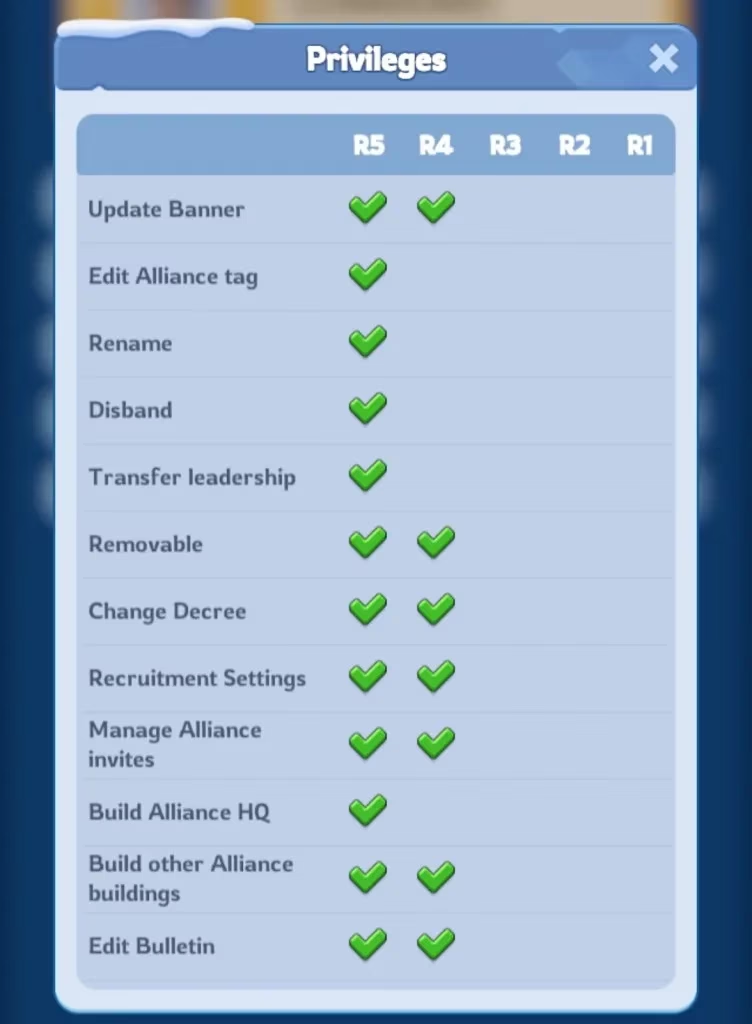
Below them are the R3, R2, and R1 members. While these ranks carry differing prestige, their functional privileges are identical. Promotion within these tiers is largely symbolic, so members need not fret over their specific rank unless they are aspiring to join the leadership core. The alliance also has its own level, capping at 11, which gates access to critical features like the Bear Hunt and the ability to build Alliance Headquarters. Leveling up requires all members to contribute diligently to Alliance Tech and complete daily missions.
Carving Your Domain: Alliance Territory Explained
The concept of Alliance Territory is arguably the most strategically vital system in the game. It is your alliance's sovereign land on the world map, a bastion that provides key advantages:
-
Territory Bonuses: Placing your city within this zone grants buffs like increased gathering speed and enhanced troop stats when defending.
-
Strategic Defense: Enemies cannot use Advanced Teleporters to jump directly into your territory, forcing them to approach from the periphery.
-
Passive Resource Generation: Resource buildings (Iron Mines, Woodmills, etc.) within your territory automatically contribute resources to the alliance stockpile every hour. This passive income is the lifeblood for funding Alliance Tech.
Establishing territory begins with building an Alliance HQ. There are two types:
-
Icefield HQ: The initial foundation of your territory.
-
Tundra HQ: Unlocked later via research, allowing expansion into fog-covered regions.
Expansion is achieved through Alliance Banners. Each Banner creates a 7x7 area of influence and must overlap with another Banner or the HQ to connect territory. Strategic placement is key to enveloping resource nodes and creating a contiguous, defensible domain. The number of Banners you can place is increased through the Territory Tech tree.
Pillars of Power: Buildings and Facilities
Within and around your territory, various structures offer power and rewards.
| Structure Type | Purpose | Key Notes |
|---|---|---|
| Resource Locations | Generate passive alliance resources. | Captured by surrounding them with your territory. |
| Hunting Trap | Enables participation in the Bear Hunt event. | Requires careful placement for optimal scoring. |
| Prestige Buildings | Grant powerful buffs (e.g., to gathering). | Earned via high placement in events like Alliance Championship. |
| Alliance Gathering Node | A protected, high-yield gathering spot for all members. | Lasts 12 hours; one can be active at a time. |
Facilities are special neutral buildings scattered across the map that provide powerful buffs to the controlling alliance. To capture one, your alliance must first have territory connected to it, then occupy it for 30 continuous minutes. Control lasts for 3 days. Beware: attacking facilities carries a risk of troop injury and loss, scaling with the facility's level.
Facility Capture Risks:
-
Level 1: 10% Severely Injured
-
Level 2: 20% Severely Injured
-
Level 3: 30% Severely Injured
-
Level 4: 30% Severely Injured and 10% Losses
Similarly, Fortresses and Strongholds are captured during weekly Fortress Battles, requiring pre-registration and direct PvP conflict with other alliances vying for the same objective.
The Collective Mind: Alliance Tech and Resources
Alliance resources, gathered passively from territory, are separate from your personal stockpile. They are used exclusively for Alliance Tech—a trio of research trees that benefit every member.


-
Growth Tech: Focuses on alliance development (member capacity, help speed).
-
Territory Tech: Enhances territory expansion (more banners, resource output).
-
Battle Tech: Strengthens PvP capabilities.
Contributing resources to a tech project grants the player Alliance Tokens and Contribution Points, while giving the alliance EXP. Leaders can "favorite" specific techs for members to prioritize, often offering bonus rewards. This system is a symbiotic ecosystem where individual contribution directly fuels collective evolution.
Tools for Triumph: Help, Shop, and Rally
-
Help Feature: Request aid from allies to reduce building and research timers. The reduction amount and number of helps you can receive both improve with Alliance Tech upgrades.
-
Alliance Shop: A perk of membership, offering Daily and Weekly sections. Use your hard-earned Alliance Tokens to purchase VIP EXP, Advanced Teleporters, Shields, and Speedups.

- Rallying Beasts: Alliances can rally to take down powerful Polar Terrors and event beasts like Berserk Cryptids. Joining a rally costs no Stamina and is an excellent way to earn rewards passively—ensure 'Auto Join' is enabled!
Pro Tips for Alliance Leaders and Aspirants
For those looking to lead or excel within a top alliance, heed these strategies refined through years of gameplay:
-
Start Early & Be Selective: Founding or joining a pioneering alliance gives a massive headstart in recruiting active players. Be ruthless in removing inactive members, especially in a new State's volatile early days.
-
Delegate Authority: A trusted team of R4 officers is essential for managing recruitment, diplomacy, and event leadership. Don't try to shoulder everything alone.
-
Master Diplomacy: Engage with other top alliances. Diplomacy can secure non-aggression pacts, organize facility rotation schedules, and create a more stable State environment.
-
Focus Tech Wisely: Initially, prioritize the Growth Tech tree to increase member capacity and banner limits, accelerating your alliance's foundational expansion.
-
Foster Engagement: Use in-game tools like polls to involve members. Ensure everyone can participate in core events like the Bear Hunt. An engaged alliance is a powerful one.
In conclusion, an alliance in Whiteout Survival is far more than a chat room; it is the fundamental unit of survival, conquest, and community. By mastering its territories, technology, and social dynamics, you transform from a survivor into a shaper of the frozen world.