There are 10 types of people in the world: those who love programming games and those who do not. That old joke gets a fresh workout whenever the Steam Programming Fest rolls around, because the event is built for the first group. It is a focused, four-day celebration of games about automation, coding, problem-solving, and the fantasy of becoming a legendary hacker without ever leaving the keyboard. For the ordinary player with a passing interest in how systems work, it is a low-pressure way to peek behind the curtain.
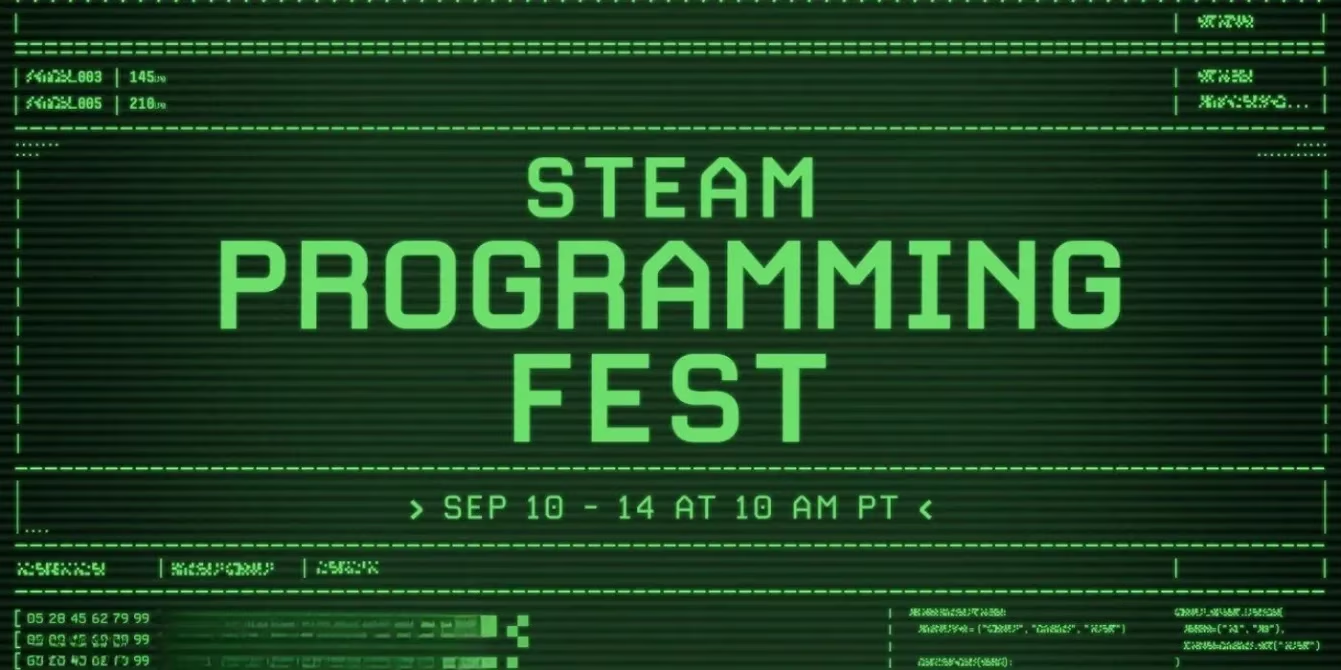
The festival has a simple pitch: players can learn to automate systems, chase the most efficient coding solutions, or live out a hacker power fantasy inside a video game. The reference even jokes that the hacker skills might transfer to the real world, though nobody can really control that outcome. What matters is the mood. These are games that reward curiosity, patience, and the strange satisfaction of watching a messy process become a clean, repeatable machine. In 2026, that appeal is as strong as ever, especially for players who want a break from reflex-heavy action and endless loot loops.
The catch is the calendar. This is a shorter fest, and the reference notes that players only have four days to take advantage of the deals. The edition described runs until September 14, and the practical rule is blunt: if the date is before September 14, the sale games are available; after that, the window closes. In 2026, the short-window rhythm is still the key detail to remember. The Steam Programming Fest is a sprint, not a marathon. Players who wait for a quiet weekend to browse may find that the weekend arrives after the sale has already packed up.
So what does the fest actually offer? It is not one genre so much as a cluster of related pleasures. Some games turn programming into a puzzle box. Others turn it into a management sim, a logic challenge, or a sandbox for creative over-engineering. A few lean hard into the hacker aesthetic, with terminals, encrypted files, and dramatic reveals. The common thread is that the player is asked to think in systems rather than simply react.
| Player itch | What the fest tends to offer | Why it matters |
|---|---|---|
| Automation cravings | Games about building machines, routines, and self-running systems | Players get the joy of making chaos behave |
| Efficiency obsessions | Coding puzzles and optimization challenges | There is always a cleaner solution to chase |
| Hacker fantasy | Terminal-style adventures and cyber-flavored mysteries | The fantasy is fun, even when the “code” is fictional |
That table is not a formal catalog, but it captures the flavor. The Steam Programming Fest is best for players who like the idea of learning while playing. They do not need to be professional developers. They do not need to know a real programming language. They just need to enjoy the moment when a confusing set of rules clicks into place. 🧠
For the average player, the festival also works as a sampler. A four-day sale is short enough to feel urgent, but it is also a good excuse to try something outside the usual backlog. Maybe the draw is an automation game that quietly eats a whole evening. Maybe it is a coding puzzle that makes the brain hum. Maybe it is a hacker story with just enough melodrama to keep the terminal glowing. The reference asks a fair community question: will players buy anything from the fest, and are there other deals worth sharing? That question is part of the fun. A niche sale like this often spreads through word of mouth, with players comparing picks and warning each other about the games that look simple but demand serious thought.
The bigger takeaway is that the Steam Programming Fest knows its audience. It does not try to be everything to everyone. It leans into a specific identity: code-curious players who like efficiency, automation, and the pleasure of solving a problem properly. The joke about 10 types of people is really a filter. Some players see a wall of programming games and move on. Others see a four-day window and start checking their wishlists. For that second group, the festival is a small but satisfying event, and the only real mistake is assuming there will be plenty of time later. ⏳