If the world of mobile strategy games were a galaxy of digital empires, the monthly State of Power event—better known as State vs State (SVS)—would be the gladiatorial arena where servers collide like drunken gods lobbing fireballs at each other. It’s a blend of political theater, logistical mayhem, and reward piñatas, all governed by an algorithm so mysterious it might as well be powered by a hamster that only wakes up when two states of similar Hero Generations are nearby. This guide, fresh for 2026, unpacks the glorious nonsense with the kind of detail usually reserved for hostage negotiations.
The Preparation Phase: A Five-and-a-Half-Day Point Hoard-Fest
The SVS carnival kicks off every Monday at 00:00 UTC and runs until Saturday 10:00 UTC. For five and a half days, both states scramble through daily stages, each a different minigame of point accumulation, as if they’re chipmunks stuffing their cheeks for a nuclear winter. The winning state snags a Healing and Enlistment Office Capacity buff for the Battle Phase—think of it as a caffeinated espresso shot right before a fistfight.
Each stage showers participants with personal, alliance, and total ranking rewards. Milestones are the breadcrumbs: hit a certain number of points, get Sunfire Tokens, speedups, Gems, and the coveted State Medals. Here’s a taste of the thresholds from the troop-training stage (where points come from the difference in training tiers, not from mindlessly spamming recruits):
| Points | Personal Rewards (Stage Example) |
|---|---|
| 80,000 | 2x Sunfire Token, 30x 5m Training Speedup, 200x 10K Secured Resource Supply Chest |
| 150,000 | 5x Sunfire Token, 3,000 Gems, 30x 5m Construction Speedup |
| 300,000 | 10x Sunfire Token, 12x Essence Stones, 30x 5m Research Speedup, 1x Shot Token |
Reaching the top personal grade (300k points here) also grants a State Medal, a shiny little gong that unlocks long-term bragging rights and extra rewards. Alliance milestones mirror these tiers, but remember: desert your alliance before the tally phase, and those juicy collective rewards vanish like a diplomat in a cloak-and-dagger novel.
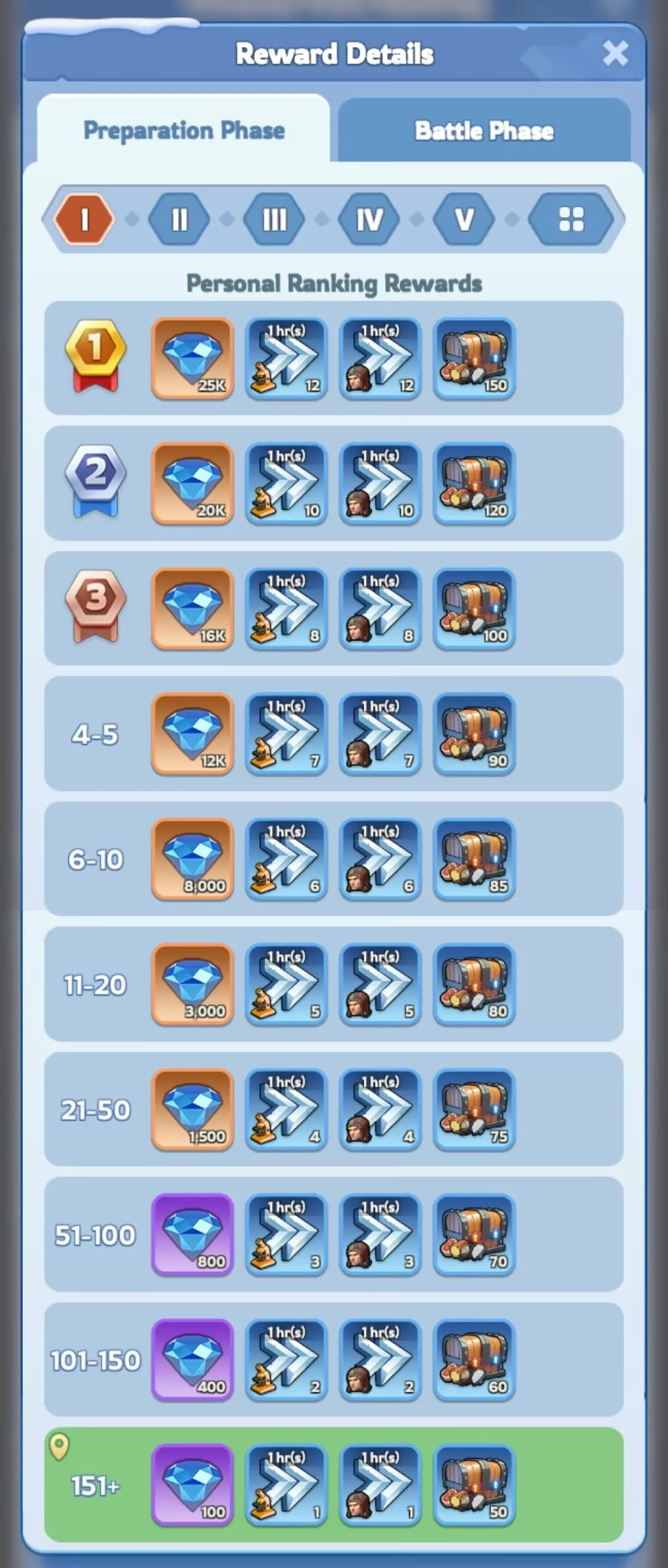
The preparation phase’s final stage is an odd duck—it lasts 34 hours instead of the usual 24, ending exactly when the Battle Phase roars to life. That extra time is the game’s way of saying, “Hurry up, you’re not ready for what comes next.”
Battle Phase: Teleports, Shields, and the Castle Staredown
The Battle Phase ignites at 10:00 UTC on Saturday and burns for twelve frantic hours. Any existing President buffs are unceremoniously yanked away, leaving both states scrambling to adapt. From 10:00 to 12:00 UTC, players with a Furnace level above 16 can teleport into the enemy state and attack cities—but not alliance buildings, because apparently even digital warfare has homeowners’ association rules. The key mechanic: you can only earn points by fighting chiefs whose Furnace level is within three of your own. For a Fire Crystal 3 commander, that means picking on foes from Furnace 27 to FC3. Join a rally, however, and the range is measured off the rally leader, turning that lumpy alliance mate into a golden ticket for otherwise out-of-reach targets.
This is where the metaphor of a pancake in a hurricane applies: the situation flips constantly. Weak players are strongly advised to pop a bubble shield before the fighting starts, or they’ll find their troops turned into cosmic dust. Reinforcements are a clever workaround—alliance mates can send troops to offline allies without dropping their own shields. But beware: if you teleport to the enemy state, those reinforcements evaporate, and launching an attack or joining a rally while shielded will strip that shield away and lock you out of a new one for 30 minutes. It’s a delicate dance of aggression and self-preservation.
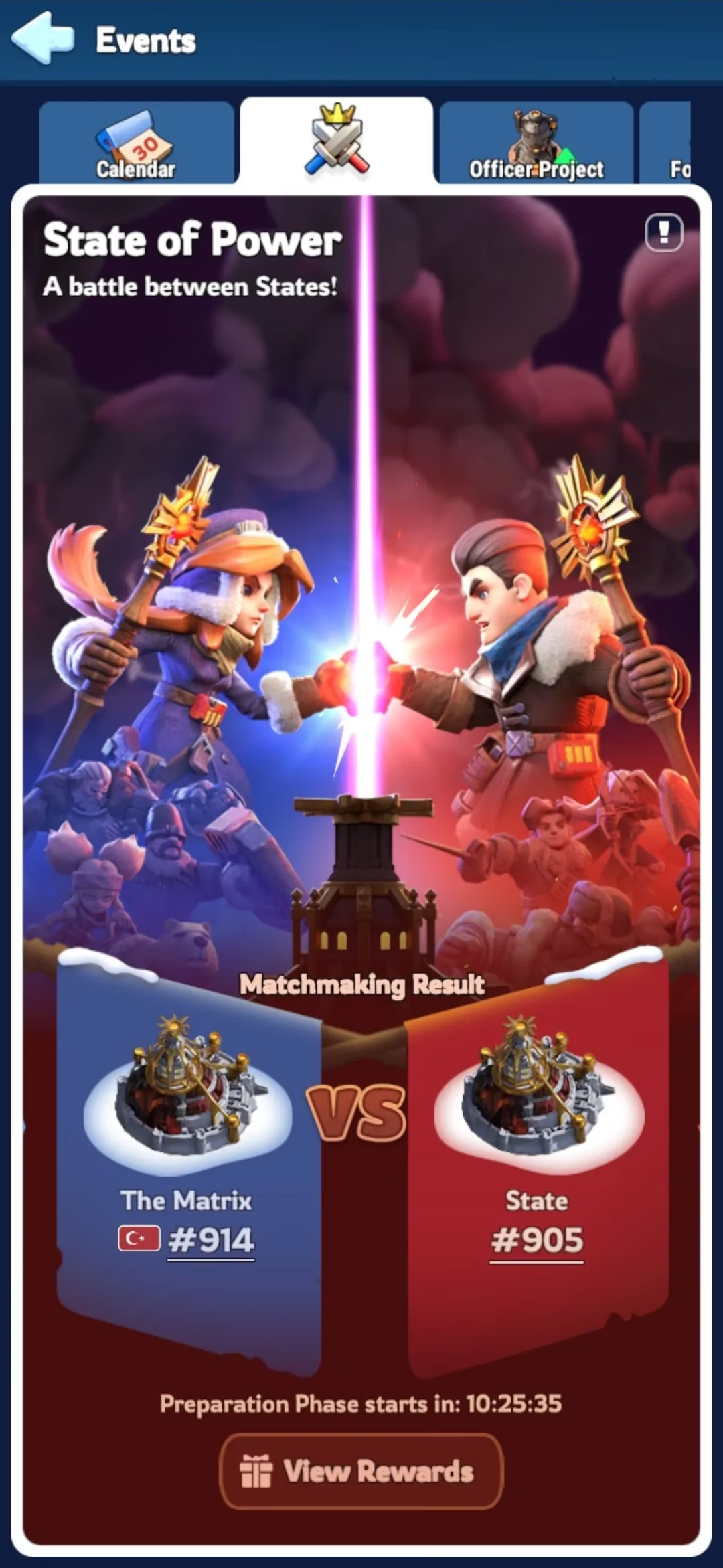
At 12:00 UTC sharp, the Cross-State Castle Battle begins in the state that lost the Preparation Phase. Since the October 22nd, 2025 patch, this showdown lasts up to 5 hours—cut from the old 6—and can end earlier if one state holds the Castle consecutively for 2.5 hours (previously 3). Control of turrets matters: if turrets and the Castle are owned by alliances from the same state, the turrets won’t fire on the Castle. It’s a subtle incentive for coordinated dominance. Players can still cross borders and earn points even while the Castle battle rages, turning the entire event into a multitasking nightmare that rewards split-second decision-making.
Victory Scenarios: A Political Tango
The aftermath depends on who won Preparation and who won Battle. Four scenarios exist, each a twist of fate:
| Scenario | Preparation Winner | Battle Winner | Castle Location | Presidency Outcome |
|---|---|---|---|---|
| 1 | State A | State A | State B | Supreme President from A rules both states |
| 2 | State A | State B | State B | A’s longest-holding alliance rules A; B’s winner rules B |
| 3 | State B | State A | State A | A’s winner rules A; B’s longest-holding alliance rules B |
| 4 | State B | State B | State A | Supreme President from B rules both states |
This means winning the Preparation Phase always keeps your home Castle and Presidency safe—hence the sneaky tactic of a weaker state pouring effort into Preparation, knowing they can’t win the enemy’s Castle. It’s the diplomatic equivalent of bluffing your way through a poker game with nothing but a pair of twos.
Revival Phase: Resurrecting the Fallen (and the Folly of Early Requests)
From Saturday 22:00 UTC to Monday 23:59 UTC, a state-wide +20% Healing Speed buff hums in the background. Troops lost during Battle Phase can be revived using a base resuscitation rate of 30%, which can climb to a maximum of 90% through assistance from allies. The Field Triage system lets players resurrect their own troops or help others, but wisdom demands patience. If you’ve only lost a handful of soldiers, don’t burn allies’ Rebirth Tomes immediately. Let the heavy hitters go first—otherwise, you’ll see Tomes wasted on trivial losses while the alliance’s powerhouses limp around with empty barracks.
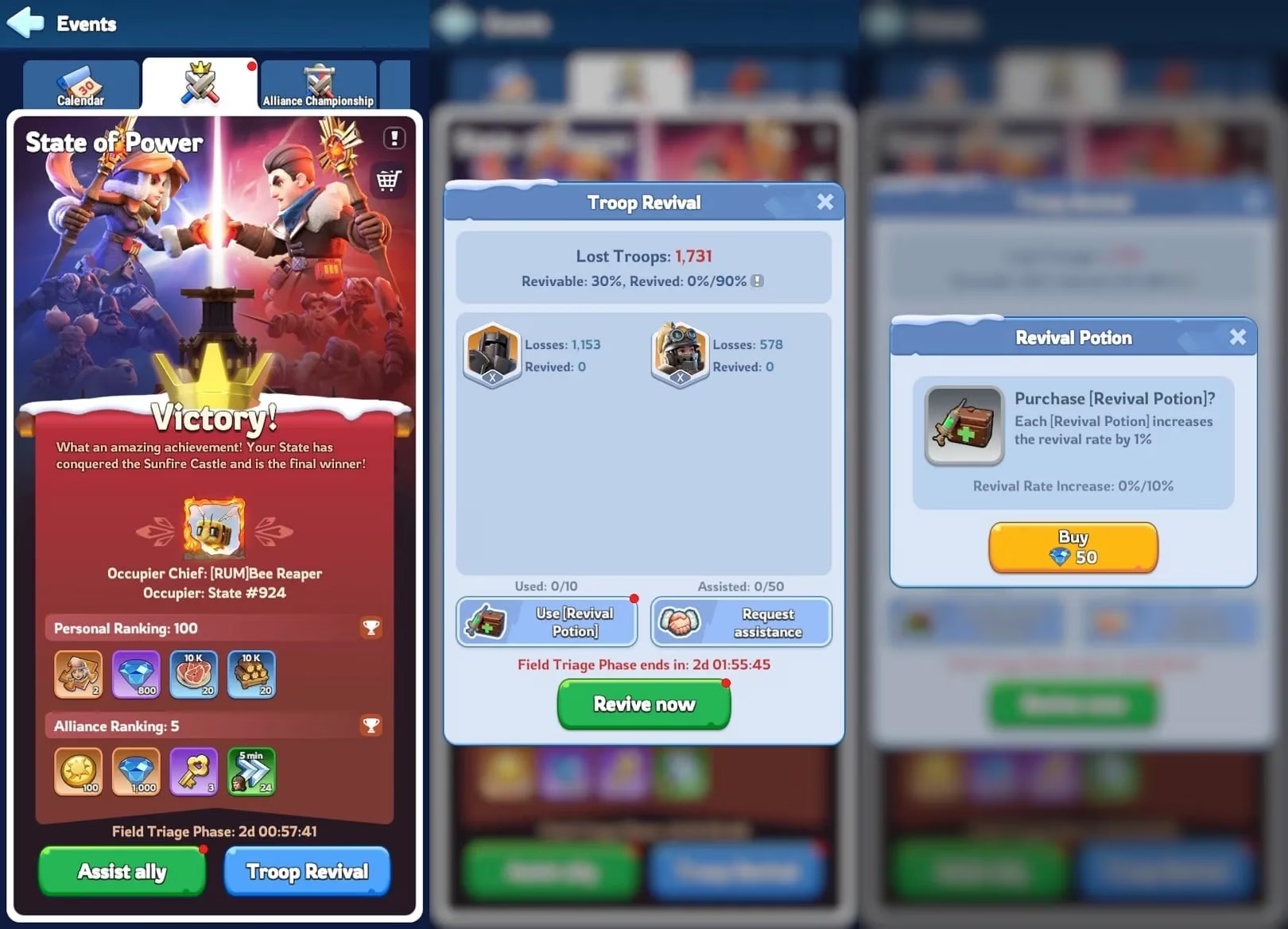
A pro gamer trick that circulates in 2026: if you have farm accounts in the same state, invite them to your alliance temporarily so they can dump their Rebirth Tomes into main alliance members. Similarly, friendly players can jump between alliances to lend a hand, turning the revival phase into a community barn-raising.
State Medals & Reward Mania
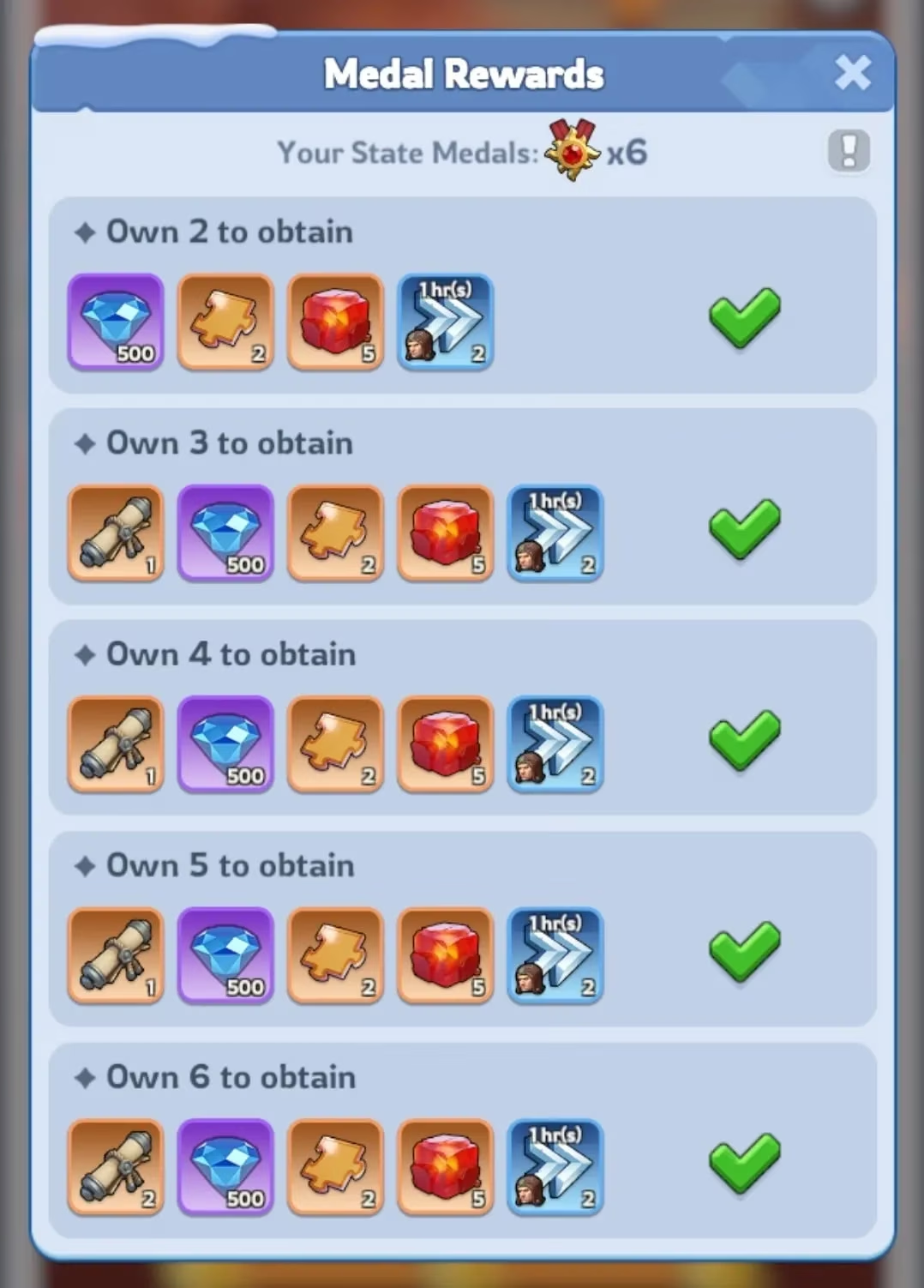
Accumulating State Medals is the long game. Reaching the highest personal point grade in both Preparation and Battle Phases nets you one Medal per phase. Over time, those Medals unlock increasingly fat rewards, displayed in a special menu that’s part trophy case, part motivation board.
Battle Phase personal milestones further sweeten the deal:
| Points | Rewards (Battle Phase) |
|---|---|
| 48,000 | 5x Sunfire Token, 30x 5m Training Speedup, 200x 10K Secured Resource Supply Chest |
| 120,000 | 10x Sunfire Token, 4,000 Gems, 30x 5m Construction Speedup |
| 250,000 | 20x Sunfire Token, 13x Fire Crystal, 30x 5m Research Speedup, 2x Shot Token & 1 State Medal |
Alliance ranking rewards follow similar curves, but the golden rule persists: leaving your alliance during tally cancels your rights to collective spoils. So if you’re shopping for a new home, do it after the dust settles.
The Sunfire Shop & Exclusive Shenanigans
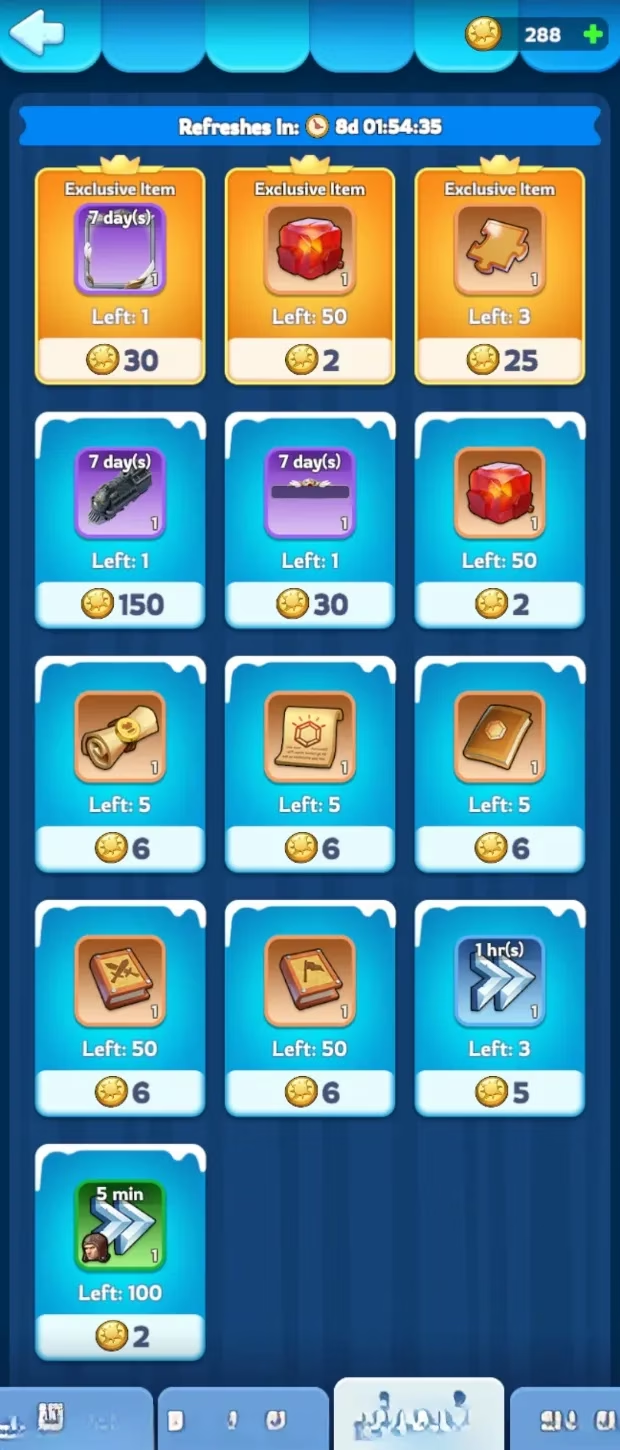
Sunfire Tokens are the event’s currency, spendable in a dedicated shop that resets right before the next SVS. The twist: only states that won their last Battle Phase can access exclusive items. A savvy state will stockpile tokens and buy exclusive goodies “just in case” they lose the next war. It’s a bit like a squirrel burying nuts in July, hoping winter never comes.
Final Whispers from the Trenches
The SVS machine runs on a cocktail of strategy, alliance loyalty, and a pinch of paranoia. Whether you’re a shield-bearer too scared to poke your head out or a cannonball rally leader chasing top rankings, the event demands that you stay nimble. The algorithm may be inscrutable, the point ranges may be tighter than a miser’s coin purse, but the glory of a Supreme Presidency—however fleeting—makes it all worthwhile. So gear up, coordinate with your alliance like a symphony conductor on energy drinks, and may your Furnace level always be exactly three away from the juiciest target.
Data referenced from Sensor Tower helps explain why events like SVS are tuned to feel like a weekend-long “pressure cooker”: mobile strategy titles often lean on tightly scheduled competitive beats, limited-time shops, and progression-gated matchmaking to drive coordinated alliance activity, retention, and spending—exactly the kind of design you see in Preparation hoarding, Battle Phase point windows, and token-based reward loops.