I still remember the night the Paladin reveals for Reign of the Black Empire dropped. My group chat lit up with bad jokes, fake predictions, and one very specific question: Sean Plott, where are you? I do not even think he plays Hearthstone anymore, but longtime players remember his presence. That nostalgic ping is exactly why I love reveal season. One card name can drag you back through years of ladder nights, meta shifts, and the eternal argument about whether Paladin is finally allowed to have nice things.

In 2026, I measure every reveal against a different checklist. I care less about flashy stat lines and more about identity, synergy, and whether a package can survive rotation. The Paladin drop had that familiar mix of holy light, martial discipline, and a few genuinely strange toys. It felt like a class package designed for players who enjoy building a board, protecting it, and then turning small advantages into a slow, grinding win.
The cards that made me lean forward
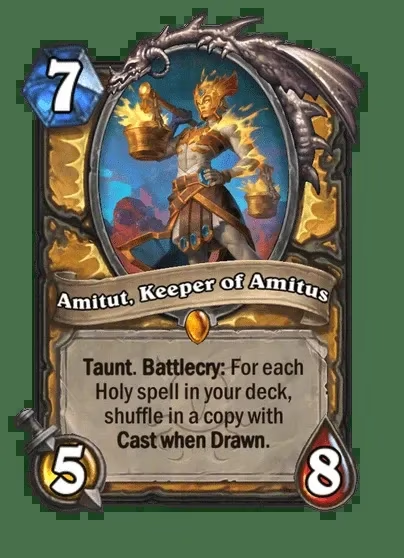
Amitut, Keeper of Amitus was the first name that stopped me. The name alone suggests a guardian, a stabilizing body, and a value engine rolled into one keeper fantasy. I do not need every stat line burned into my memory to recognize the role: this is the kind of card that anchors a midrange plan. If it protects my curve or refills my hand, I will test it immediately.
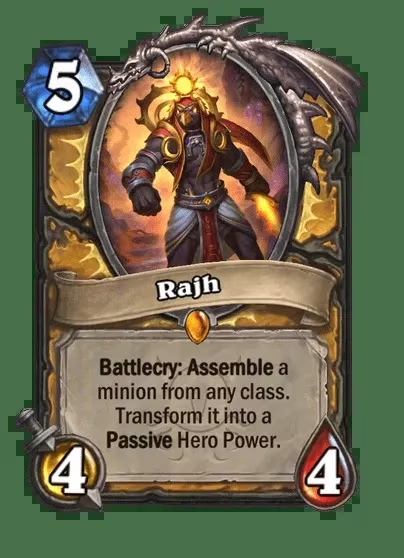
Then came Rajh, and this is where my inner rules lawyer woke up. Rajh has a curated pool of cards to make Passive Hero Powers, excluding minions with effects like Battlecries or Deathrattles. The effect of the minion you create becomes a Passive Hero Power, and you do not actually get the minion. That is a huge distinction. I love designs like this because they reward knowledge. You are not just playing a card; you are choosing a permanent engine from a controlled menu. In a 2026 meta full of efficient removal and snowballing threats, a passive hero power can be the difference between a fair deck and a nightmare matchup.
The rest of the reveal drop filled out the Paladin identity nicely. I have been keeping a mental table of what each card suggests, even before final testing.
| Card | My first read |
|---|---|
| Amitut, Keeper of Amitus | A keeper-style anchor for midrange and value plans |
| Rajh | The showstopper, with a curated passive hero power engine |
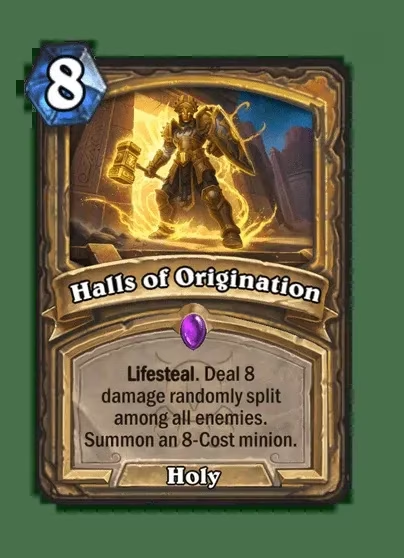
| Halls of Origination | A location that likely rewards setup and board control |
| Mogu Warmaster | A martial tempo card that fits aggressive Paladin curves |
| Oathbinder's Aura | An aura effect that screams board persistence and synergy |
| Proto-Pandaren | Early-game presence with a flexible, proactive feel |
| Sun's Reckoning | A board-control or comeback tool with holy flavor |
| March to War | Tempo and pressure, likely best when I already have a board |
| Humble Judgment | Discipline, removal, and the classic Paladin sense of justice |
| Lightcaller | Light synergy that could tie healing or buffs together |
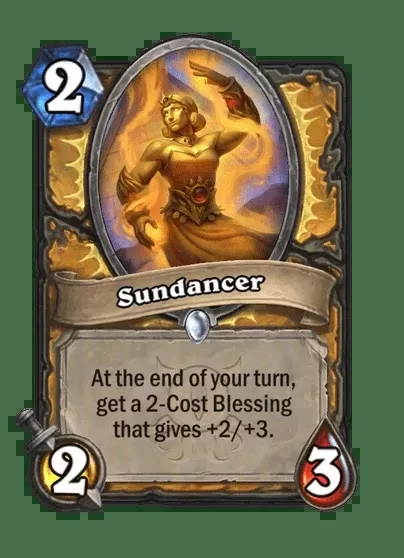
| Sundancer | Healing and board presence, a natural stabilizer |
The leak that changed the conversation
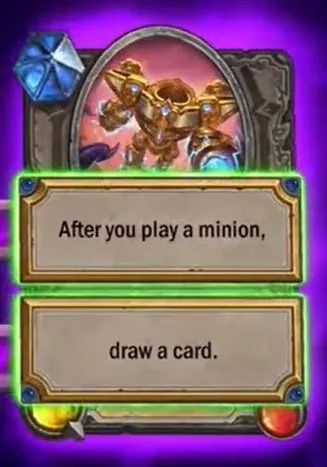
A new card, 0C91 Chariot, was leaked during a reveal video with the effect After you play a minion, draw a card. We do not know the Cost or stats yet. That missing information matters, but the effect is already dangerous. Paladin has always loved minions that stick, and a draw engine attached to playing minions can turn a fair curve into a relentless value machine. If the Cost is reasonable, I expect this to be one of the most discussed cards in the package. If it is expensive, it becomes a build-around reward for decks that can flood the board early.
I also keep looking at cards like Oathbinder's Aura, Proto-Pandaren, Sun's Reckoning, March to War, Humble Judgment, Lightcaller, and Sundancer as puzzle pieces rather than isolated reveals. That is the 2026 lesson for me: card text is temporary, but package identity lasts. A Paladin deck wants a plan. It wants a curve, a board, a way to protect the board, and a payoff that does not fold to one sweeper. This reveal drop gave me plenty of reasons to experiment.
How I would test the package
First, I would test the Rajh passive hero power paths in a slow midrange shell. Knowledge of the curated pool will matter more than raw power. Second, I would slam 0C91 Chariot into every minion-heavy list and see whether the draw engine is fair or absurd. Third, I would check whether the aura and location cards create enough staying power against modern removal. Paladin is at its best when the opponent has to answer every small threat and still loses to the cumulative pressure. That is the dream I am chasing.
So yes, Sean Plott, where are you? I do not even think he plays Hearthstone anymore, but I remember his presence, and I remember why reveal season still makes me feel like a newer player again. The Paladin cards from Reign of the Black Empire gave me that feeling in 2026: holy light, martial tempo, a strange passive hero power, and a leaked chariot that might draw my whole deck one minion at a time. 🛡️✨
Recent trends are highlighted by The Verge - Gaming, whose reporting often frames reveal seasons around broader design philosophy, making it a useful reference point for reading Paladin’s Reign of the Black Empire package as more than a set of isolated cards and instead as a deliberate push toward board-centric pressure, long-term value engines, and identity-driven deckbuilding.